News and economy
COP31 enters its second week: how close are climate-finance pledges to usable funding?
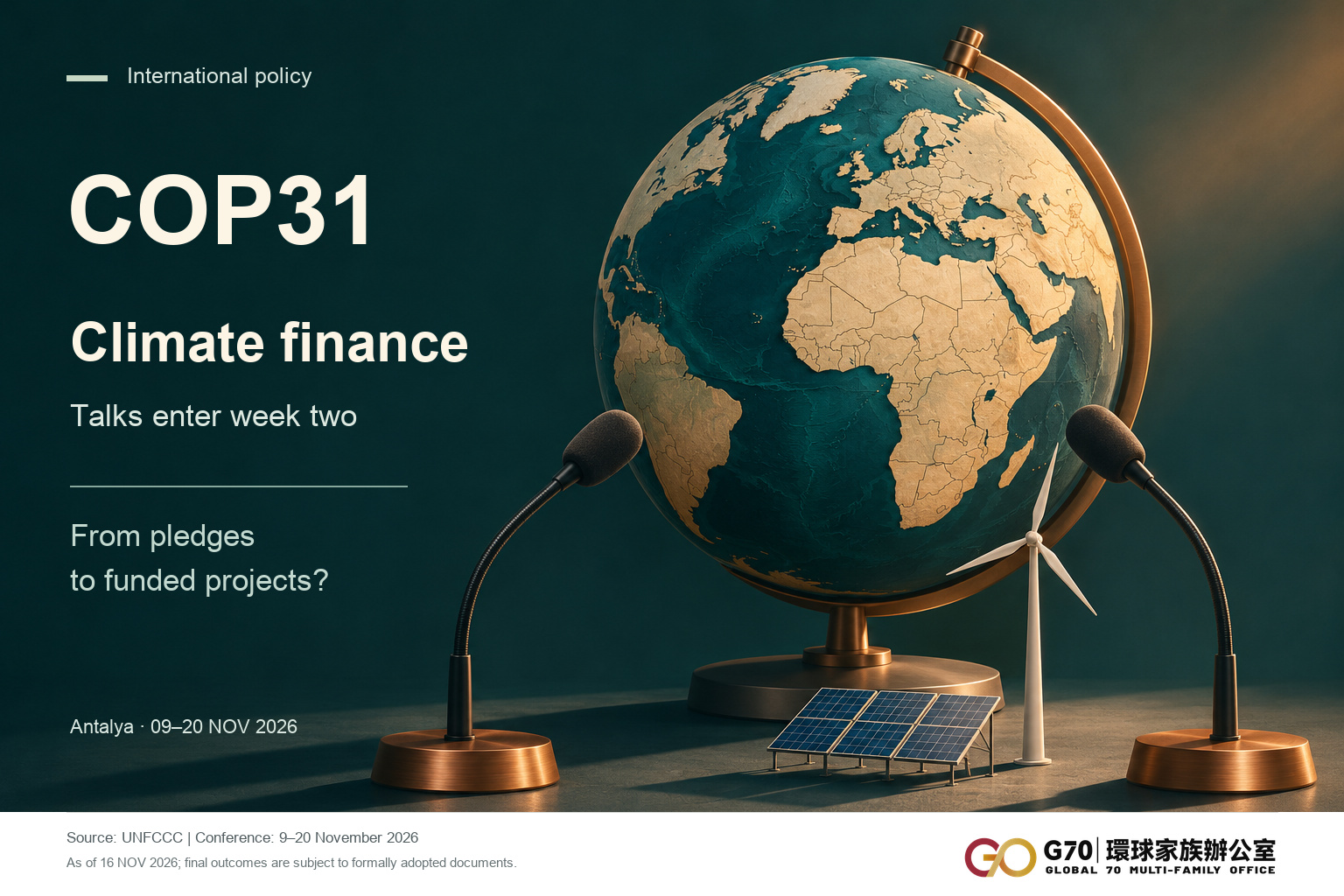
COP31, the UN climate change conference, runs from 9 to 20 November in Antalya, Türkiye. As the meeting enters its second week, climate finance remains on the agenda. Who supplies the money, in what form and how it reaches those needing support are central questions when assessing such negotiations.
The development
The agenda adopted on 9 November covers long-term climate finance, the Green Climate Fund and the Fund for responding to Loss and Damage, alongside adaptation and technology development and transfer. The UNFCCC presidency consultation page lists discussions on a proposed cover decision on 10, 11 and 13 November. Discussion does not establish a final agreement.
From a pledge to a project
A headline funding amount is only a starting point. Assessing whether an arrangement can support factory upgrades, building improvements or new technology requires details of funding sources, instruments, eligibility and disbursement conditions.
Grants and loans have different effects. A grant can reduce the cost borne by a project, while a loan must still be repaid with interest. A guarantee’s usefulness depends on the risks it covers, who assumes them and whether lenders accept its terms. These are ways to assess a financing arrangement, not descriptions of measures already adopted at COP31.
Disbursement terms matter
A concrete commitment should identify the contributor, intended recipients, application route and payment timetable. Without those details, an overall amount says little about when money will become available. Whether a particular project qualifies can only be assessed once the applicable conditions are published.
As of 16 November, the conference remains in progress. Its final outcome and implementation arrangements must be checked against formally adopted documents.
Official and primary sources
Information as of 16 November 2026.